Page 1 of 3
“Baloney Detection” in the era of “fake news”
 In attempting to help my students (and extended family) recognize these categories more responsibly – preferably before they share them – I think it’s useful to remember Carl Sagan’s chapter on “The Fine Art of Baloney Detection” from 1996.
January 2017 / 3 min.
Privacy, autonomy, and birth control in America, 1860-1900
 Access to birth control became, controversially, protected by the “right to privacy” in 1965; a hundred years before, “procreation was a matter of public concern.” Yet, contradictorily and confusingly, Victorian women – and their bodies – were protected (and limited) by a powerful social division between private and public spheres.
May 2016 / 6 min.
Victorian domestic specialization and gender roles
 As the Victorian version of separate spheres solidified in the mid-nineteenth century, the “idea of wifely sainthood gained ever more credence as housewives found themselves increasingly isolated from the male-operated world.”
May 2016 / 3 min.
Surveillance and Sodomy in 1918 Sacramento
 A “cleanup” of 1918 Sacramento resulted in an intensified “[p]olice surveillance of boardinghouses, brothels, pubs, and gambling houses” and effectively turned these areas – none of which were traditional domestic homes – into “semipublic” spaces.
April 2016 / 5 min.
Four useful analytic categories from science and technology studies
 Science and technology studies (STS) is an interdisciplinary collection of analytic approaches. In his analysis of the Digital Millennium Copyright Act, Philip Doty pulls out four concepts from STS that he believes are particularly useful
February 2016 / 2 min.
Privacy can keep histories of abuse hidden from public view
 Privacy can serve both to protect individuals and to shield abusers from public visibility.
February 2016 / 2 min.
Affirmative vs. passive privacy in domestic violence and abortion
 A “passive” version of the right to privacy – the “right to be let alone” – creates challenges for advocates against domestic violence. A more “active” version provides a viable alternative.
February 2016 / 2 min.
David Seipp on Themes of the Nineteenth-Century Rhetoric of Privacy
 In his late 1970s work, The Right to Privacy in American History, David J. Seipp argues that the “unity of the privacy phenomenon” in the nineteenth century came not from a singleness of motive, but rather from “a unity of language” (Seipp 116).
October 2014 / 4 min.
Sex and Eugenics Sterilization
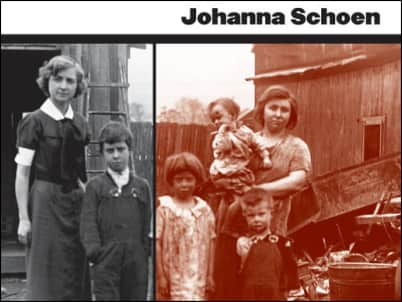 In looking through Johanna Schoen’s 2005 book, Choice & Coercion: Birth Control, Sterilization, and Abortion in Public Health and Welfare, it appears that, although eugenics-based sterilization procedures in the early-to-mid twentieth century appear to have targeted women more than men, men were also sterilized through these programs.
October 2014 / 4 min.
“I can’t help myself, I’m a man” – rape apologia, circa 1840
 Does this rape defense sound familiar to anyone else? “Man is susceptible to the inclinations of the female sex.”
July 2013 / 1 min.